 DE
DE FA
FA EN
EN
Guide
Limescale rings on the tap and a dull film on the shower screen come off without a harsh descaler too. Hot micro steam softens the deposit with pure heat, you wipe it off. No acid, no vinegar smell, no gloves. This page shows step by step how it works.
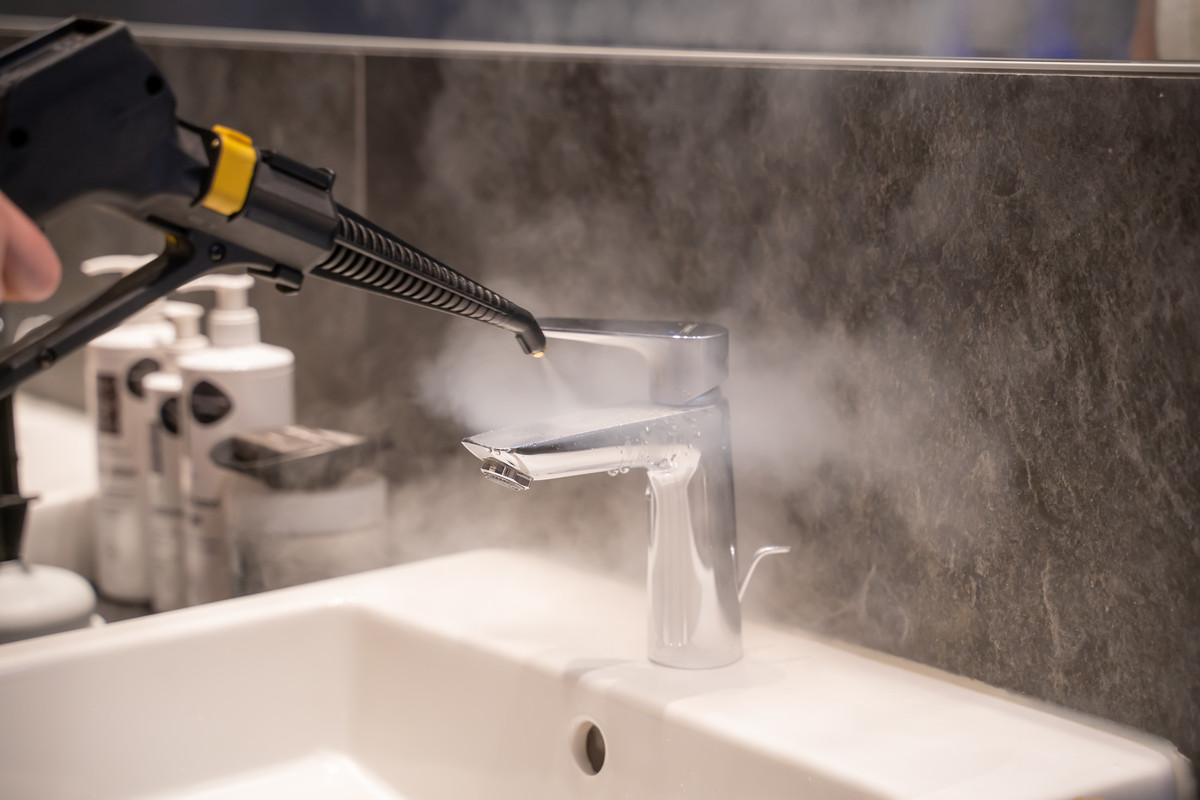
Hot micro steam at around 180 °C softens limescale deposits and soap residue, you wipe them off or squeegee them away. No acid, no smell. Honestly though: thick, old layers of limescale need several passes.
Hard water leaves its marks: white rings on the tap, a dull film on the shower screen, rough tiles. In many Styrian municipalities the water comes out of the tap with plenty of hardness, so the limescale reliably returns.
Harsh descalers and bathroom cleaners work with acids. It is no coincidence that the manufacturers themselves advise gloves and good ventilation on the bottle. Many products also contain fragrances and preservatives that are considered contact allergens. [Source: DermNet] And whatever goes down the drain ends up in our waterways through the wastewater. [Source: UBA]
Vinegar is the home-remedy alternative, but it has its own drawbacks: the smell lingers in the bathroom, and the acid attacks seals, natural stone and some coatings.
Descalers irritate the skin and eyes, hence the advice to wear gloves and ventilate.
A pungent cleaner or vinegar smell lingers in the bathroom for a long time.
Seals, natural stone and some coatings do not tolerate acid well.
Inside the device, tap water is heated under pressure to around 180 °C. The fine, hot steam hits the limescale deposit and softens it along with soap residue. Then you wipe the surface with a cloth or squeegee it. No acid, no smell, just heat and water.
Honestly: thick, old layers of limescale do not disappear in one go. There it takes several passes, layer by layer. Surfaces steamed regularly, by contrast, stay easy to look after, because the limescale never settles in the first place. How the heat works in detail is explained in the micro steam overview.
No descaler, no vinegar. One device, the right attachment, hot steam.
Three ways to tackle limescale. The difference lies in the smell, in the material and in what goes into the wastewater.
| Hot micro steam | Descaler / bathroom cleaner | Vinegar / citric acid | |
|---|---|---|---|
| How it works | Heat softens limescale | Acid dissolves limescale chemically | Acid dissolves limescale chemically |
| Odour | none, just water vapour | often pungent, ventilation needed | vinegar smell lingers |
| Irritants | none | acids, often fragrances and preservatives | acid, irritating when concentrated |
| Material care | gentle, test sensitive coatings first | acid can attack surfaces | attacks seals and natural stone |
| Wastewater | nothing but water | residues end up down the drain | comparatively harmless |
| Repetition needed | several passes for thick layers | apply repeatedly for heavy limescale | long dwell time, often repeated |
„At demonstrations I go for the limescaled tap first. The first pass takes off the ring, the second brings the shine. I would rather show that than promise it."

Rebecca Böhmer · chemielos
Fragrances and preservatives in cleaners are considered contact allergens (DermNet).
DermNetResidues from cleaning products pollute waterways via the wastewater (UBA, EU).
UBA · EUHot steam softens limescale and soap residue, with no acid at all. The heat also reduces germs (CDC).
Principle · CDCAnd the best part: you do not have to rely on any promise. A free demonstration shows the result on your own tap.
Frequently asked questions
Yes, but differently from an acid. The hot steam softens the limescale deposit, then you wipe it off. It is physics instead of chemistry: not dissolving, but softening and removing.
Honest answer: they do not come off in one pass. You soften old layers in several rounds, layer by layer. Surfaces steamed regularly, on the other hand, stay easy to look after for good.
Steam is much gentler than acid, which can attack chrome-plated and coated surfaces. On sensitive coatings, test the steam beforehand on a small, inconspicuous spot.
Yes. Steam it and pull it off with the squeegee, like cleaning windows. Limescale marks and soap film soften and come away with the water.
Vinegar dissolves limescale, but it has drawbacks: the smell lingers, and the acid can attack seals, natural stone and some coatings. Steam works with no acid and no smell, just heat and water.
With the same device you also clean grout joints, windows, mattresses and the vehicle interior. At the free demonstration we show it on your own surfaces.
Talk is cheap. A free demonstration shows in a few minutes what micro steam achieves at your place. No obligation, throughout Styria.
Request a demonstration →Free, no obligation, at your place.