 DE
DE FA
FA EN
EN
Guide
Limescale on fittings and shower walls, soap residue, narrow grout joints. Harsh bathroom and limescale cleaners smell strong and irritate. Hot micro steam dissolves limescale and dirt with pure heat, reaches into every grout joint, entirely without chemicals. This page shows step by step how it works.
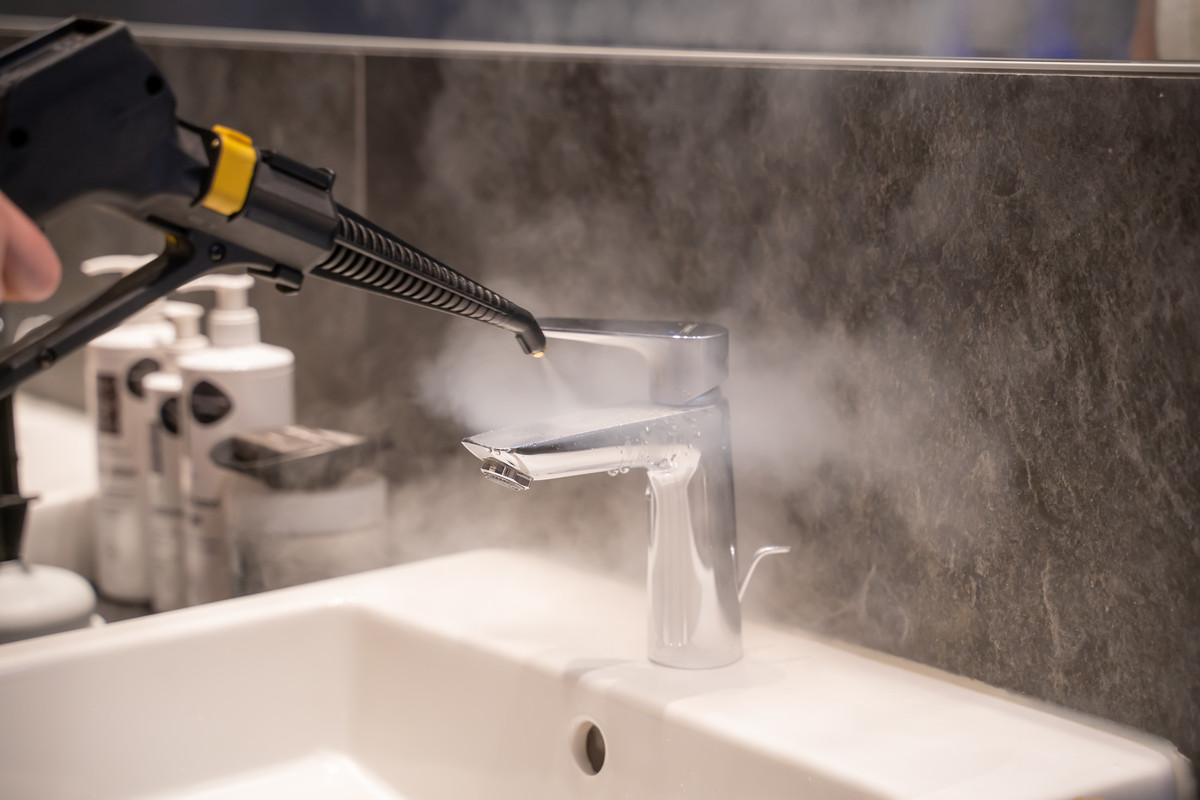
Hot micro steam at around 180 °C softens limescale and soap residue on fittings, tiles and shower walls and reduces germs through heat, without any harsh bathroom cleaner (proven: CDC, Sexton 2011).
Limescale builds up everywhere: on fittings, on glass and tiles. Narrow grout joints and silicone collect dirt and are hard to reach with a cloth. Soap residue adds to it.
Harsh limescale and bathroom cleaners contain irritating substances. You have to ventilate and wear gloves. [Source: DermNet] And whatever goes down the drain ends up in our waterways through the wastewater. [Source: UBA]
The smell often lingers in the room long after the bathroom is clean.
On fittings, on glass and tiles, limescale clings stubbornly.
Dirt collects in narrow grooves that a cloth cannot reach.
Limescale and bathroom cleaners irritate and leave a smell hanging in the room.
The steam, at around 180 °C, softens limescale, soap residue and dirt. Afterwards they simply wipe away. The heat also reduces germs on fittings and in the bathroom. [Source: CDC]
Because the steam contains very little water, the surface dries quickly and streak-free. How the heat works in detail is explained in the micro steam overview.
No spray, no gloves. One device, the right attachment, hot steam.
Three ways to a clean bathroom. The difference lies in the effort and in what is left behind.
| Hot micro steam | Limescale/bathroom cleaner | Home remedy (vinegar & lemon) | |
|---|---|---|---|
| How it works | Heat softens limescale | harsh acid dissolves limescale | mild acid, scrubbing |
| Reaches into grout joints | yes, fine jet of steam | runs off, acts briefly | hard to dose |
| Harsh fumes | none, just water vapour | yes, ventilation needed | strong vinegar odour |
| Germs through heat | yes, reduced through heat | only with an additive | no |
| Residues/wastewater | none, water evaporates | chemicals into the wastewater | acid into the wastewater |
| Streaks on glass | hardly any, little residual moisture | often streaks | often streaks |
“Talk is cheap. You only see the difference when the steam works on your own surface.”

Rebecca Böhmer · chemielos
Moist heat reduces microorganisms (CDC).
CDCSaturated steam reduced the germ count on surfaces by over 90% (Sexton 2011).
Sexton 2011Substances from cleaning products act as allergens (DermNet) and pollute water bodies (UBA, EU).
DermNet · UBA · EUAnd the best part: you don't have to rely on any promise. A free demonstration shows the result in your own bathroom.
Frequently asked questions
Yes. The heat softens limescale and soap residue so they wipe away. For heavy limescale, steam the spot again briefly.
Yes. The steam contains little residual moisture. Squeegee the surface briefly and the glass stays streak-free.
No. Fittings and tiles tolerate the hot steam. Steam silicone only briefly and wipe it off.
The steam dissolves dirt and deposits and reduces germs through the heat. But the grout joint only stays clear for good with proper ventilation.
Usually not. Hot steam from plain tap water is enough; the heat does the work.
With the same device you also clean grout joints, the kitchen and the floor. At the free demonstration we show it on your own surfaces.
Talk is cheap. A free demonstration shows in a few minutes what micro steam achieves at your place. No obligation, throughout Styria.
Request a demonstration →Free, no obligation, at your place.