 DE
DE FA
FA EN
EN
Guide
The mop bucket often just spreads dirty water around, the mopping agent leaves streaks, and the grout joints stay grey. Hot micro steam dissolves the dirt with pure heat and uses only a little water. The floor is dry and walkable again quickly. This page shows step by step how it works.
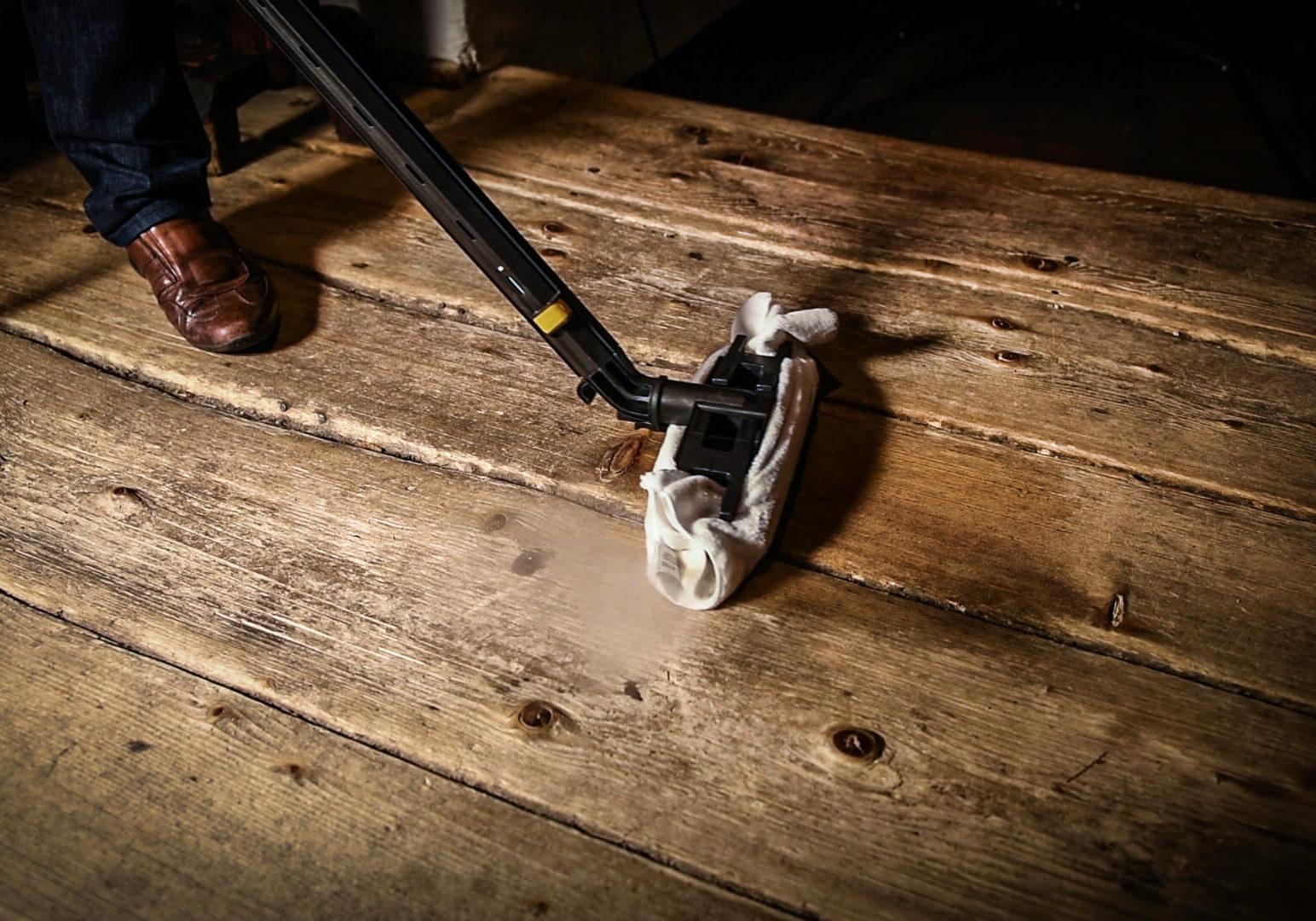
Hot, low-water micro steam loosens dirt on tiles, stone and sealed wood, dries quickly and reduces germs through heat, without any mopping agent (proven: CDC, Sexton 2011).
With the mop you often just push the dirty water back and forth. What sticks to the floor spreads instead of disappearing.
Floor cleaner leaves a film and streaks that only become visible once the floor has dried. New dirt sticks to this film more quickly, so the floor looks dull again sooner. On top of that, many cleaners contain irritant additives. [Source: DermNet] And the residues end up in our waterways through the wastewater. [Source: UBA]
Some of the dirty water also seeps into the lower-lying grout joints. Mopping does not make them lighter, it makes them darker. More on this in the grout guide.
The result is a floor that glistens with moisture but isn't really clean.
The mop pushes the dirty water across the floor instead of cleaning it.
A film is left behind and shows as streaks once the floor is dry.
The dirt stays in the tile grout joints, where the mop can't reach.
Inside the device, tap water is heated to around 180 °C. The hot, low-water steam dissolves grease and dirt and picks it up in the cloth without soaking the floor. In doing so, the heat reduces germs. [Source: CDC]
Because hardly any residual moisture is left, the floor is walkable again quickly. That matters especially with wood and stone. How the heat works in detail is explained in the micro steam overview.
No mop bucket, no agent. One device, the right attachment, hot steam.
Three ways to a clean floor. The difference lies in how it works and in what is left behind.
| Hot micro steam | Mop & agent | Hardware-store steam mop | |
|---|---|---|---|
| How it works | strong heat dissolves dirt | agent and water, lots of pushing | steam, usually wetter and cooler |
| Residual moisture, drying | low, quickly walkable | lots of water, slow to dry | often wet, damp for longer |
| Chemicals needed | no, only water | yes, mopping agent | usually no |
| germs reduced through heat | yes, around 180 °C | no | partly, depending on temperature |
| Grout | narrow nozzle reaches them | often stay grey | limited |
| streaks | none, no agent film | often from the agent | possible when wet |
“Talk is cheap. You only see the difference when the steam works on your own surface.”

Rebecca Böhmer · chemielos
Moist heat reduces microorganisms (CDC).
CDCSaturated steam reduced the germ count on surfaces by over 90% (Sexton 2011).
Sexton 2011Substances from cleaning products act as allergens (DermNet) and pollute water bodies (UBA, EU).
DermNet · UBA · EUAnd the best part: you don't have to rely on any promise. A free demonstration shows the result on your own floor.
Frequently asked questions
Yes, if you work quickly and not too wet. Because the steam leaves hardly any residual moisture, it suits sealed wood well. You should avoid unsealed wood.
For tiles, stone, laminate and sealed parquet. Test sensitive coverings beforehand on an inconspicuous spot.
No, only slightly damp. The steam is low in water, so the floor is walkable again quickly.
Yes. With a narrow nozzle you guide the steam right into the grout joints, where the heat dissolves the dirt.
Usually not. Hot steam from plain tap water dissolves the dirt, and a floor cloth picks it up.
With the same device you also clean the bathroom, grout joints and carpet. At the free demonstration we show it on your own surfaces.
Talk is cheap. A free demonstration shows in a few minutes what micro steam achieves at your place. No obligation, throughout Styria.
Request a demonstration →Free, no obligation, at your place.