 DE
DE FA
FA EN
EN
Guide
Between the fins and in the ribs, dust builds up over the years that no cloth and no feather duster can reach. The fine, hot jet of steam gets in there, loosens the dust and pushes it out. This page shows step by step how it works, and where the limits are.
Between the fins of a radiator, dust builds up that no cloth can reach. The fine, hot jet of steam with the nozzle loosens it and pushes it onto a cloth behind, with no chemicals at all. Important: only work on a cold radiator that is turned off.
Between the fins and in the ribs, dust builds up for years. No cloth and no feather duster gets in there. When the heating first comes on in autumn, it smells of scorched dust, and the warm air carries the dust into the room.
Spray cleaners are no solution in the convection slots. Many contain fragrances and preservatives that are considered contact allergens. Methylisothiazolinone was named Contact Allergen of the Year in 2013 and is found in cleaners, among other products. [Source: DermNet] And whatever is washed off ends up in the waterways via the wastewater. [Source: UBA]
Then there is the physics: dust on the heating surfaces acts like a layer of insulation. The radiator has to work harder to give off the same heat to the room.
The fins and ribs are too narrow for a cloth, brush or feather duster.
When the heating first comes on in autumn, the dust on the heating surfaces burns.
The layer impedes the heat output, the radiator has to work harder.
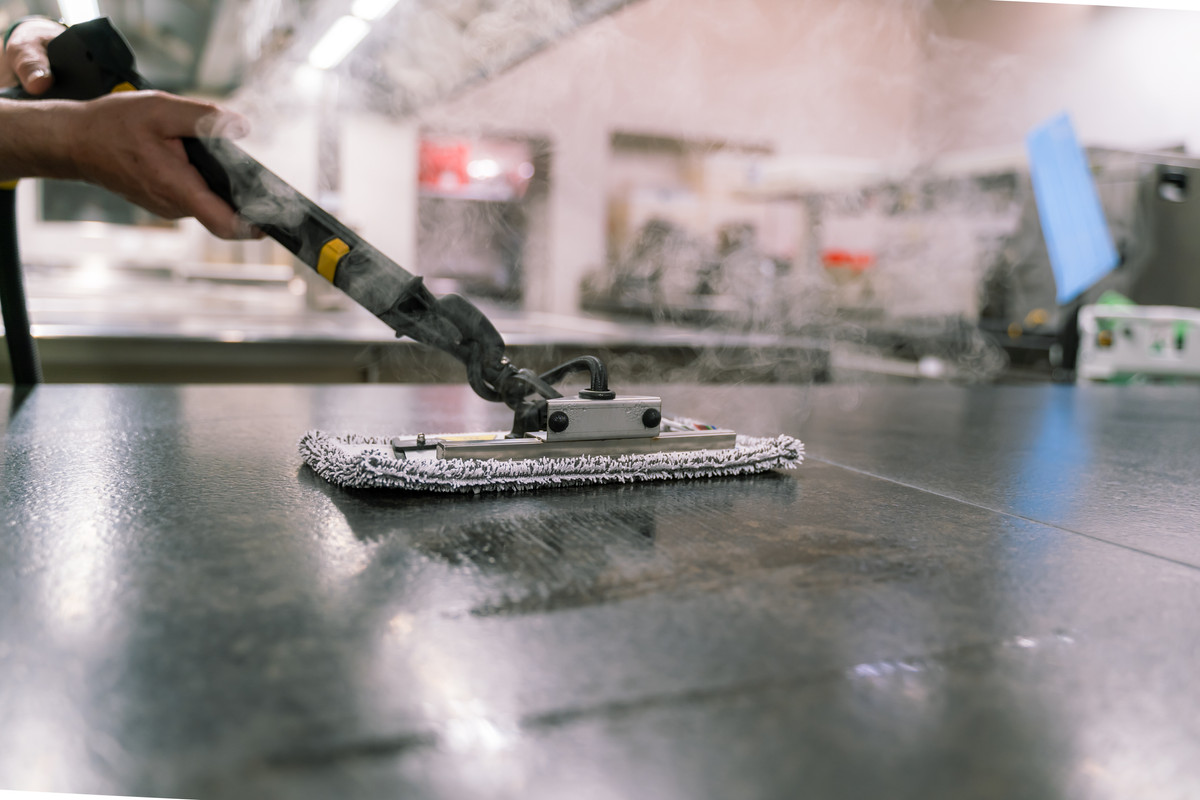
Inside the device, tap water is heated under pressure to around 180 °C. Focused by the nozzle, the fine jet of steam gets through the fins and between the ribs. It loosens the dust and the film of nicotine or grease on it and pushes both out. A cloth behind or beneath catches the dirt. As a side effect, the heat reduces germs on the surfaces.
Important, and we say this plainly: you only work on a cold radiator that is turned off. Electric radiators and electronics are not steamed, or only when the manufacturer expressly permits it, and always disconnected from the mains. Only water belongs in the convection slots, no spray cleaner. How the heat works in detail is explained in the micro steam overview.
No chemicals, no dismantling. One device, the nozzle, two cloths.
Three ways to tackle the dust in the radiator. The difference lies in how deep the effect reaches and in what happens to the dust.
| Hot micro steam | Feather duster & radiator brush | Compressed-air spray | |
|---|---|---|---|
| Gets between the fins | yes, fine jet of steam with the nozzle | hardly, only into the outer gaps | yes, but uncontrolled |
| What happens to the dust | is bound by moisture, the cloth catches it | is partly stirred up, partly just moved around | swirls into the room air |
| Nicotine and grease film | the heat loosens it too | stays | stays |
| Chemicals involved | no, only water | no | propellant from the can |
| Effort | once thoroughly, with cloths laid underneath | repeat often, moderate result | fast, but the dust ends up in the room |
| Also for grout joints, bathroom, mattress | yes, the same device | no | no |
„At demonstrations I hang a white cloth behind the radiator. What the steam gets out of there after years, nobody believes beforehand."

Rebecca Böhmer · chemielos
Moist heat reduces microorganisms (CDC).
CDCSubstances from cleaning products act as allergens (DermNet) and pollute water bodies (UBA, EU).
DermNet · UBA · EUDust on heating surfaces acts like a layer of insulation and impedes the heat output. That is simple physics.
How it worksAnd the best part: you do not have to rely on any promise. A free demonstration shows the result on your own radiator.
Frequently asked questions
With the nozzle. It focuses the jet of steam so finely that it gets through the convection slots. The pressure pushes the loosened dust out, a cloth behind or beneath catches it.
According to the manufacturer, the steam contains only a little residual moisture. A cloth under the radiator is enough; it catches dust and moisture together.
Before the heating season, before the dust scorches for the first time. And, as a rule, always on a cold device that is turned off.
Dust on the heating surfaces acts like a layer of insulation; the radiator has to work harder to give off the same heat. A clean radiator gives off its heat to the room unhindered.
Honest answer: do not steam them, unless the manufacturer expressly permits it. Always unplug them first. When in doubt, stick to a damp cloth on the outside.
With the same device you also clean floors, windows, grout joints, the bathroom and mattresses. At the free demonstration we show it on your own surfaces.
Talk is cheap. A free demonstration shows in a few minutes what micro steam achieves at your place. No obligation, throughout Styria.
Request a demonstration →Free, no obligation, at your place.